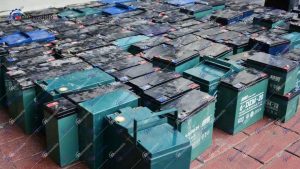
Used power batteries have high voltages and must be fully discharged before recycling. Currently, there are two main methods for safely discharging used lithium-ion batteries. One is physical discharge, which mainly eliminates the charge through an external load; this is only suitable for laboratory testing and not for large-scale discharge. The other is chemical discharge, which uses the positive and negative electrodes of the battery as the cathode and anode, respectively, utilizing an electrolysis process in a solution to consume the remaining charge. Typically, sodium chloride solution is used as the electrolyte, and the used lithium-ion battery is used as the discharge power source. This method is simple and easy to implement. However, using brine for discharge raises a series of technical issues, such as wastewater generation, exhaust gas emissions and collection, and material handling. Therefore, how to achieve environmental protection and automation in industrial applications is a problem we need to solve.
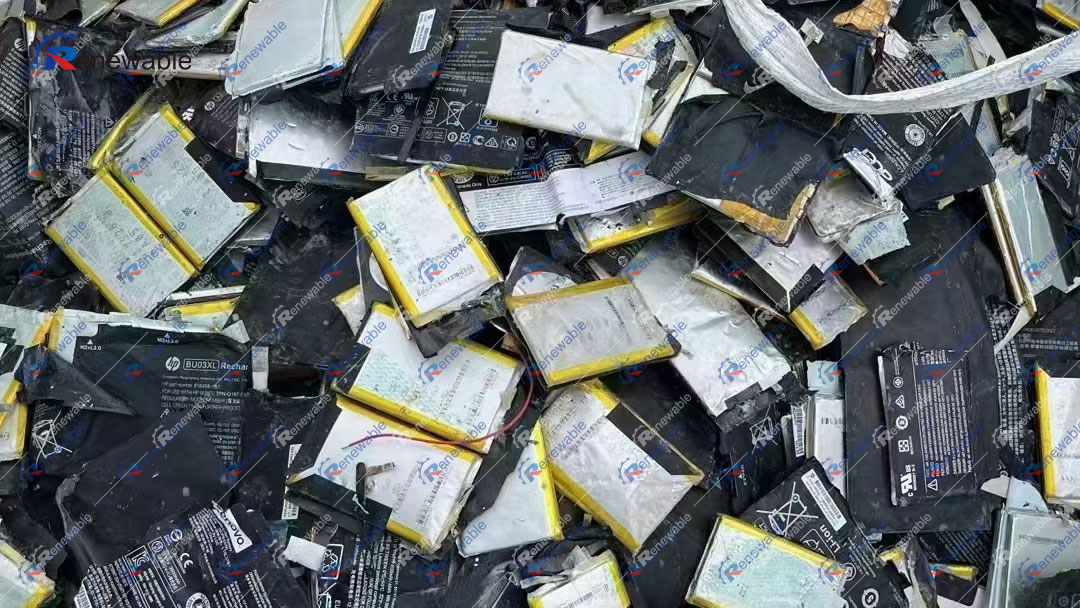
This used lithium-ion battery discharge system includes a discharge battery for storing brine. Each discharge battery is equipped with an openable and closable sealed cover, and each discharge battery is connected to an exhaust gas treatment device for collecting and treating the exhaust gas generated during discharge. This invention has advantages such as simple structure, ease of manufacture, improved working environment, and environmental friendliness. This waste lithium-ion battery discharge system includes multiple discharge batteries for storing brine and an exhaust gas treatment device.
When this waste lithium-ion battery discharge system discharges waste lithium-ion batteries, the specific steps are as follows:
1. Adjust the concentration of the brine in the discharge batteries by controlling the amount of sodium chloride added, adjusting the brine concentration to 5-10%;
2. Place the waste lithium-ion batteries in a container frame, open the sealing cap of battery 1, place the container frame containing the waste lithium-ion batteries into battery 1, close the sealing cap, and turn on the exhaust gas treatment device;
3. Control the soaking time of the waste lithium-ion batteries in the discharge battery for 72 to 96 hours, until the voltage is below 1.5V, then remove the waste lithium-ion batteries;
4. Transfer the discharged waste lithium-ion batteries to a vibrating dehydrator 6, using the vibrating dehydrator to remove the surface moisture of the waste lithium-ion batteries, reducing their surface moisture content to below 5%.
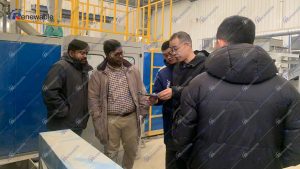
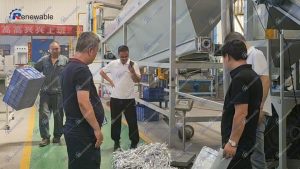
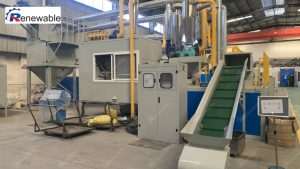
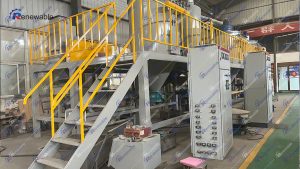
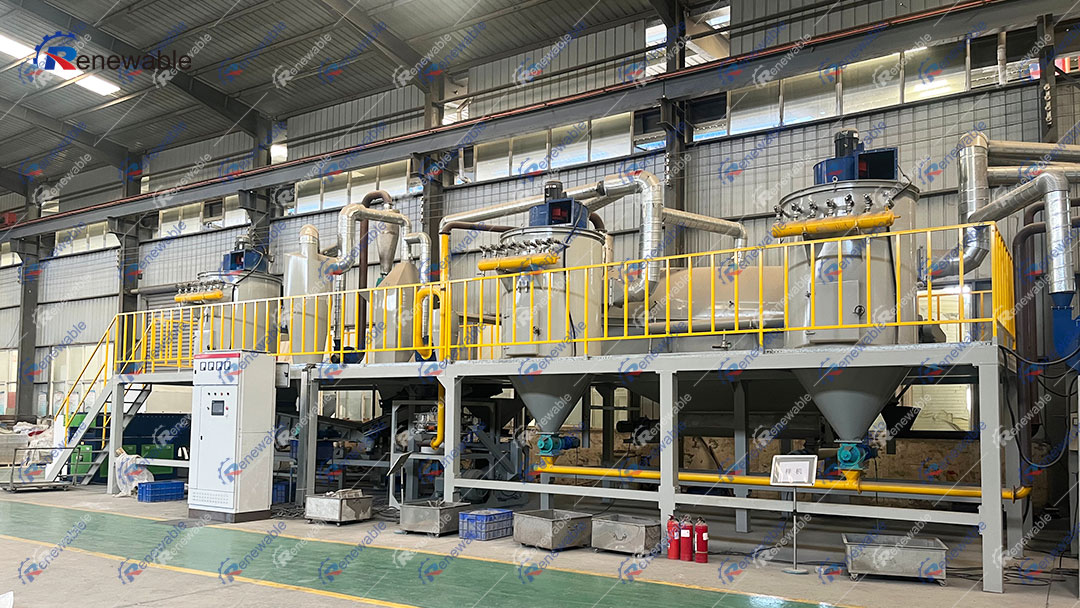
Finally, physical separation can be achieved through crushing and sorting methods. Lithium-ion battery recycling lines separate metals and separator paper from lithium-ion batteries through processes such as crushing, pulverizing, air separation, and sorting, effectively achieving the environmentally friendly treatment of billions of waste lithium batteries. Existing equipment and processes can further separate copper and aluminum. A complete waste lithium battery crushing and recycling system can be divided into a lithium battery separation production line and a lithium battery positive and negative electrode separation production line. These two production lines can be connected and shared, or used independently. If you are interested in our products, please contact us to visit our factory for inspection and trial operation.