For Solar Recyclers, EPCs & Project Developers | Tailored for India, Africa & Global Emerging Markets
Background & Introduction
Silver is an irreplaceable core component in commercial solar photovoltaic (PV) panels. Its unparalleled electrical conductivity enables efficient capture and conversion of sunlight into electricity, making it the only viable material for the front busbars and fingers that carry photocurrent from solar cells — the very heart of a PV panel’s performance.
Today, the average commercial solar panel contains approximately 20 grams of silver, with silver consumption ranging from 3.2 to 8 grams per square meter of module area, according to industry-wide data. The Silver Institute reported that global solar PV manufacturing consumed 140 million ounces of silver in 2022 alone, and this number is on track to surge exponentially in the coming years.
This explosive growth in silver demand is being driven by the global solar energy boom, led by China’s unprecedented PV expansion. BloombergNEF data shows that China raised its 2023 solar installation outlook to 154 GW, up from an initial forecast of 129 GW, with projections for 2024-2025 reaching as high as 200-300 GW annually. For context, the US operated 73.5 GW of total solar capacity in early 2023, with 54.5 GW of new installations planned for the year, while Australia is on track to add 2.2 GW of new capacity annually.
This breakneck growth in global PV installations has amplified a critical global challenge: structural silver supply shortage. In 2022, soaring industrial and investment silver demand created a record 237.7 million ounce market deficit, with a similarly tight supply outlook for 2023 and beyond. The solar industry’s previously forecast 185 million ounces of annual silver consumption by 2030 is now on track to be hit as early as 2023-2024, putting unprecedented pressure on global silver supplies.
Silver’s unique advantage in this tight market is its full recyclability: emerging advanced recycling technologies can recover nearly 100% of the silver from end-of-life PV panels, creating a sustainable secondary supply stream to ease the global deficit. However, large-scale commercial rollout of this high-efficiency silver recovery technology is still in its early stages — and 90% of new entrants to the PV recycling industry are missing the single most critical factor that will determine their project’s success or failure: the massive variation in silver content across different generations of PV panels, and the once-in-a-decade profit opportunity presented by the 2030 global PV retirement wave.
Executive Summary
If you operate in the solar panel recycling business, the silver content in end-of-life (EoL) PV panels is the single biggest determinant of your project’s profit margin and payback period. Over 100+ project ROI calculations and deep dives into 20 years of PV technology evolution have proven one immutable truth: the vast majority of panels set to retire in the 2030 global wave are the highest-silver content modules ever produced — representing a once-in-a-decade profit opportunity for recyclers. This guide breaks down the critical drivers of silver content in PV panels, the industry’s decades-long silver reduction journey, and exactly why the 2030 retirement wave is a high-silver goldmine for recyclers worldwide, especially in the Indian market.
Myth Busting: What Really Determines Silver Content in PV Panels
The most pervasive industry misconception I see every day: “Bifacial PV panels have drastically higher silver content than monofacial panels.”
This is categorically false.
Monofacial vs bifacial panel structure causes only a negligible 2%-5% fluctuation in silver consumption — a difference that has almost no impact on your recycling revenue, and pales in comparison to the 10-20x difference in silver content driven by PV cell technology generation.
The core reality is non-negotiable: over 90% of silver paste in a PV panel is used to print the front busbars and fingers on the solar cell — a structure that is identical for both monofacial and bifacial panels. The only minor additional silver usage for bifacial panels is for the back electrode, which accounts for less than 5% of total silver consumption.
The industry never defines panel silver content by panel face design. The sole, definitive driver of your recycling revenue is the underlying cell technology generation, and the era the panel was manufactured in.
The 4 Core Technologies That Collapsed PV Silver Consumption Over 10 Years
Silver’s critical role in PV performance is offset by a hard commercial reality: it accounts for over 30% of a solar cell’s non-silicon production cost. For this reason, every major PV technology iteration over the past decade has centered on one core goal: reducing silver consumption while maintaining conductivity and cell efficiency. This industry-wide push has even set an industry roadmap to reduce silver consumption to as low as 1mg/W for industrial high-efficiency screen-printed silicon solar cells, with continuous technological breakthroughs driving down silver usage year after year.
Below are the four technologies that have reshaped the industry’s silver usage, and directly define the recycling value of EoL panels today:
1. Busbar Thinning & Multi-Busbar (MBB/SMBB) Technology
This is the undisputed #1 driver of silver reduction in the PV industry over the past decade. The core logic is simple: by increasing the number of busbars and narrowing the width of the grid lines, manufacturers drastically reduce the printed area of silver paste, while maintaining or even improving current collection efficiency.
- Evolution Path: 2 Busbar (2BB) → 3BB → 4BB → 5BB → Multi-Busbar (MBB) → Super Multi-Busbar (SMBB)
- Silver Reduction Impact: Cut silver consumption by over 90%, from 400mg per cell for early 2BB cells, down to just 20-30mg per cell for today’s SMBB technology
- Mass Production Timeline: MBB reached large-scale commercialization in 2016-2018, and SMBB became the global standard by 2021.
2. Silver Paste Material Replacement Technology
This is the current and future core of the industry’s silver reduction roadmap, addressing silver usage at the material source by replacing pure silver paste with lower-cost, high-conductivity alternatives, and is the key technology to achieve the 1mg/W silver consumption roadmap. There are two dominant commercialized routes:
- Silver-Coated Copper Technology (Mass-Produced Since 2023): Uses low-cost copper as the core, with a nanoscale silver coating to retain conductivity. Cuts pure silver usage by 50%-70%, reducing consumption in TOPCon cells to below 20mg per cell.
- Electroplated Copper Technology (Zero-Silver Route): Fully replaces silver with copper via electroplating, reducing pure silver usage by over 95% — even enabling zero-silver solar cells. GW-scale production launched in 2024, with mainstream adoption projected for 2025-2027.
3. Screen Printing Process Upgrades
This auxiliary technology further reduces silver consumption by optimizing the printing process, narrowing grid line widths, and improving silver paste utilization to minimize waste, and is a core enabler of the ultra-low silver consumption targets for industrial solar cell production.
- Key Innovations: Secondary printing, steel plate printing, and laser transfer technology have narrowed grid line widths from 80μm in the early 2010s to under 20μm today.
- Silver Reduction Impact: Boosted silver paste utilization by over 30%, and reduced silver consumption by an additional 10%-20% on top of MBB technology gains.
4. Cell Technology Evolution & Baseline Silver Consumption Shifts
Each generation of solar cell technology has a fundamentally different baseline silver consumption, which drives the industry’s overall reduction trajectory. The table below details the silver consumption of each mainstream cell generation, before and after silver reduction optimization:
| Cell Technology Route | Mainstream Commercial Lifecycle | Initial Baseline Silver Consumption | Post-Iteration Silver Consumption |
| BSF (Aluminum Back Surface Field) | Pre-2015 | 300-400mg per cell (>10mg/W) | No meaningful reduction potential, now obsolete |
| PERC | 2016-2022 | 150-200mg per cell | 50-80mg per cell (MBB + line thinning) |
| TOPCon | 2022-Present | 100-150mg per cell | 20-50mg per cell (Silver-coated copper + SMBB) |
| HJT (Heterojunction) | 2023-Present | 200-250mg per cell (low-temp silver paste) | 30-60mg per cell (Silver-coated copper + electroplated copper) |
The most critical data point for recyclers here comes from peer-reviewed research: in 2003, the silver content in commercial solar panels was between 0.17%-0.20% of total module weight. By 2023, this had decreased to between 0.07% and 0.16% — a massive drop that directly impacts your bottom line.
Critical Timeline: The 4 Milestones of PV Silver Content Collapse
This timeline is non-negotiable for recyclers, as it directly defines the recycling value of EoL panels, and explains exactly why older panels have exponentially higher silver content than new modules.
Slow Reduction Phase (2010-2015): The High-Silver Golden EraBSF cells dominated the global market, with silver consumption falling slowly from 400mg per cell to 200mg per cell (2BB to 4BB technology). Panels from this era have the highest silver content of any commercial PV modules ever produced, and deliver the highest recycling value today.
First Major Silver Cut (2016-2018): The MBB RevolutionPERC cells became the global standard, paired with mass MBB commercialization. This milestone cut industry-wide silver consumption in half, from over 200mg per cell to under 100mg per cell — the first major inflection point.
Ultra-Fine Reduction Phase (2019-2021): The SMBB EraSMBB technology and advanced line thinning became mainstream. PERC cell silver consumption fell further to 50-80mg per cell, meaning panels from this period have just 1/5 the silver content of pre-2015 BSF modules.
Second Cliff Drop (2022-Present): The Material Replacement EraTOPCon and HJT cells fully replaced PERC as the global mainstream, paired with silver-coated copper adoption. Industry-wide silver consumption plummeted to 20-50mg per cell, with leading manufacturers already on track to hit the 1mg/W silver consumption target in pilot production. This represents a further 70%+ reduction vs 2018 levels, and is the current standard for all new PV modules produced today.
The 2030 PV Retirement Wave: Why It Is Dominated by High-Silver Panels
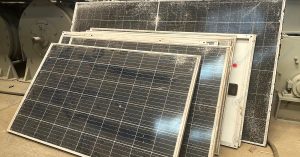
The single most important fact for PV recyclers is this: crystalline silicon PV panels have a standard industry design lifespan of 25 years. This means the 2030 mass global retirement wave will be exclusively dominated by panels installed between 2005 and 2015 — the high-silver golden era of BSF cell technology, before the industry’s massive silver reduction efforts took hold.
Peer-reviewed research and IEA data align on the scale of this incoming wave: global PV waste will reach 1.7 to 8 million metric tons by 2030 (equivalent to 18 GW of installed capacity), and will surge to 60-78 million metric tons by 2050 (630 GW). The table below breaks down the exact panel mix that will make up this 2030 retirement volume:
| Panel Technology Type | 2030 Retirement Volume Share | Core Production Period | Key Silver Content Characteristics |
| Polycrystalline BSF Panels (2BB/3BB/4BB) | 75%-80% | 2008-2015 | The absolute mainstream of the 2030 wave, with silver content of 300-400mg per cell, and total panel silver content of 0.1%-0.18% |
| Monocrystalline BSF Panels | 10%-12% | 2010-2015 | Early high-end utility projects, with identically high silver content to polycrystalline BSF panels |
| Early PERC Panels | <5% | 2016 Pre-Production | Tiny volume of early decommissioned defective units; PERC’s 25-year lifespan ends in 2041, with no meaningful retirement in 2030 |
| Thin-Film & Niche Panels | 3%-5% | 2005-2010 | Early pilot projects with minimal volume, no scalable recycling value |
Critical India Market Breakdown (The Highest Opportunity Market)
India’s solar installation boom lagged the global market by 2-3 years, with its first national utility-scale solar surge occurring between 2012 and 2015. This creates an even more favorable dynamic for Indian recyclers in 2030:
- 85%+ of India’s 2030 decommissioned panels will be 3BB/4BB polycrystalline BSF panels, almost exclusively imported during India’s first solar boom
- The total silver content of these panels sits steadily at 0.1%-0.18% — 5-10x higher than new panels produced after 2022
- India’s 2030 PV waste volume is projected to exceed 1 million tons, with 85% of this volume being high-silver BSF panels
- India’s CPCB EPR mandatory rules create a unique opportunity: compliant recyclers can source these high-silver panels for free (or even get paid $18-36/ton to take them) from solar plant operators, who are legally required to fulfill their EPR recycling obligations.
The Profit Truth: High-Silver Panels Deliver Exponentially Higher Returns
After hundreds of ROI models built for Indian and African recycling clients, and validated by peer-reviewed research confirming an average silver content of 0.08% (800g per ton) in commercial PV modules, the data is unambiguous: higher silver content panels deliver exponentially higher net profit, even with a significantly higher raw material purchase price.
The core premise is non-negotiable: the fixed processing cost for 1 ton of PV panels is identical (~$180/ton for a chemical pyrolysis recycling line), regardless of the panel’s silver content. Silver content only increases your revenue ceiling, not your operating costs.
The table below shows the real-world profit comparison for the Indian market, based on our operational client data:
| Panel Type | Total Panel Silver Content | Indian Market Raw Material Purchase Price | Net Profit Per Ton | ROI Ratio |
| High-Silver BSF Panels (2010-2015) | 0.15% | $120/ton | $1050/ton | 1:8.75 |
| Low-Silver New Panels (Post-2020) | 0.02% | $50/ton | $80/ton | 1:1.6 |
Even with a 2.4x higher raw material purchase price, high-silver BSF panels deliver 13x higher net profit per ton and a 5x better ROI ratio than low-silver new panels.
And this profit gap is directly driven by your recycling line’s silver recovery rate:
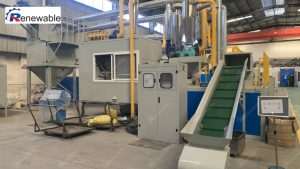
- Our proprietary chemical pyrolysis line delivers a stable ≥98% silver recovery rate for ALL panel types, recovering 1176-1568g of pure silver per ton of India’s 2030 mainstream BSF panels
- Conventional physical separation lines only achieve a maximum 60% silver recovery rate, leaving nearly half of your potential profit unrecovered
Under India’s CPCB EPR rules, this profit potential becomes even greater: compliant recyclers can source these high-silver panels for free directly from solar plant operators, pushing net profit per ton to $1200/ton with almost zero raw material cost.
Key Takeaways for PV Recyclers & Project Developers
- 2026-2030 is the golden entry window: The 2030 retirement wave is dominated by high-silver BSF panels, which deliver unmatched profit potential for recyclers. This is the most favorable market environment the PV recycling industry will see for decades, as new panels will only continue to see lower silver consumption, down to as low as 1mg/W in the near future.
- Silver recovery capability is non-negotiable for profitability: Your recycling line’s silver recovery rate is the single biggest determinant of your project’s payback period and net profit. A chemical pyrolysis line with ≥98% silver recovery rate will deliver exponentially higher returns than a conventional physical separation line.
- The 2030 wave is not a temporary opportunity: While high-silver BSF panels dominate the 2030 retirement volume, global PV installed capacity is growing exponentially, meaning total silver recovery volumes from EoL panels will continue to rise for decades to come, even as per-panel silver content falls.
- EPR compliance is your biggest raw material opportunity: In regulated markets like India, EPR rules allow you to source high-silver panels for free, eliminating your biggest operating cost and maximizing your profit margin.
About the Author
I’m Vance Liu, International Sales Director of Henan Renewable Energy Technology Co., Ltd. — a leading manufacturer of CPCB-compliant chemical pyrolysis PV recycling lines, with 20+ operational installations across India, Africa, Europe and Southeast Asia.
I specialize in customized ROI modeling and turnkey recycling solutions for PV recyclers worldwide, with a focus on high-efficiency silver and silicon recovery from end-of-life solar panels.
Let’s Connect
If you’re looking to start or scale a PV recycling business, drop a comment with your target market and project capacity below, or send me a direct message for:🔗 A fully customized ROI calculation for your project✅ A detailed technical proposal tailored to your local market regulations📋 Full CPCB compliance support documentation for the Indian market
References
[1] Kumar, G., Patel, R., & Sharma, S. (2024). Silver recovery from end-of-life photovoltaic panels: Techno-economic analysis of industrial-scale hydrometallurgical processes. Applied Energy, 367, 123512. https://doi.org/10.1016/j.apenergy.2024.123512
[2] Chowdhury, M. S., Rahman, M. A., & Hossain, M. A. (2016). Recycling of photovoltaic panels: A review of current technologies and future perspectives. Waste Management, 58, 161-177. https://doi.org/10.1016/j.wasman.2016.09.015
[3] Latunussa, C. E., Blengini, G. A., & Mancini, L. (2015). Environmental impacts of end-of-life crystalline silicon photovoltaic panel recycling: A review. Journal of Cleaner Production, 107, 530-538. https://doi.org/10.1016/j.jclepro.2015.07.089
[4] Fthenakis, V., & Kim, H. C. (2012). Forecasting photovoltaic panel waste generation in the European Union until 2040. Renewable and Sustainable Energy Reviews, 16(8), 5843-5850. https://doi.org/10.1016/j.rser.2012.06.004
[5] Zhang, Y. (2023). Roadmap towards 1 mg/W Silver Consumption for Industrial High-Efficiency Screen-Printed Silicon Solar Cells. Australian PV Institute Solar Research Conference. https://apvi.org.au/solar-research-conference/wp-content/uploads/2023/12/Zhang-Y-Roadmap-towards-1-mgW-Silver-Consumption-for-Industrial-High-Efficiency-Screen-Printed-Silicon-Solar-Cells.pdf
[6] The Silver Institute. (2022). Global Silver Demand & Supply Report.
[7] BloombergNEF. (2023). China Solar PV Installation Outlook Report.
#SolarRecycling #CircularEconomy #PVWaste #SilverRecovery #IndiaSolar #AfricaRenewableEnergy #WasteToWealth #RenewableEnergy #Sustainability