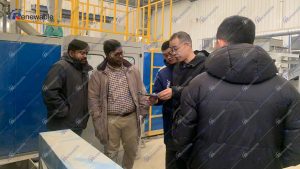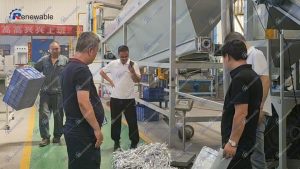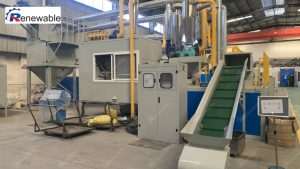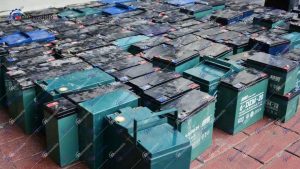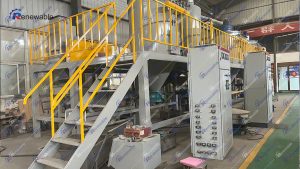
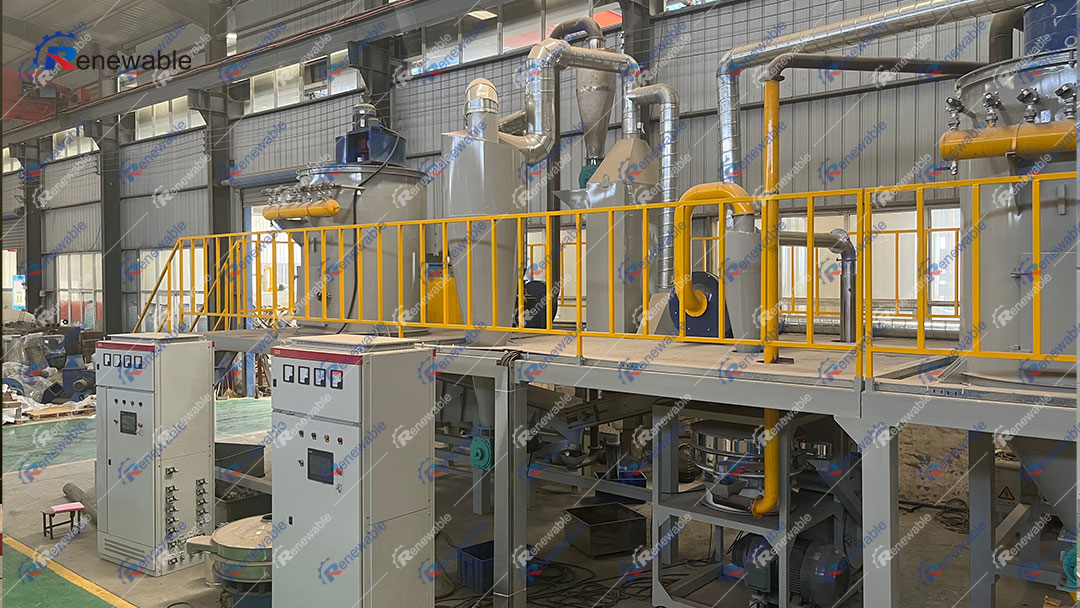
This lithium battery recycling plant, based on the structure of the positive and negative electrodes of lithium batteries and the material characteristics of their constituent materials, copper powder and carbon powder, employs a combination of hammer crushing, vibrating screening, and airflow separation to separate and recycle the components of the negative electrode of lithium batteries. Applicable scope: Lithium battery positive and negative electrodes, 18650 lithium batteries, cylindrical lithium batteries, ternary lithium batteries, scrapped automotive lithium batteries, lithium iron phosphate batteries, power lithium batteries, and other waste lithium batteries.
Lithium batteries mainly consist of a casing, positive electrode, negative electrode, electrolyte, and separator. The positive electrode is composed of lithium cobalt oxide powder coated on both sides of an aluminum foil current collector, with PVDF acting as a binder. The negative electrode structure is similar to the positive electrode, consisting of carbon powder bonded to both sides of a copper foil current collector. Lithium-ion batteries have significant advantages such as high voltage, high specific capacity, long lifespan, and no memory effect. Since its commercialization, it has rapidly occupied the power supply market for portable electronic and electrical devices, with production increasing year by year. However, lithium batteries have a lifespan of approximately two years. Improper disposal can lead to potential environmental pollution from the lithium hexafluorophosphate, organic carbonates, and heavy metals such as cobalt and copper they contain. On the other hand, cobalt, lithium, copper, and plastics in waste lithium batteries are valuable resources with high recycling value. Therefore, the scientific and effective treatment of waste lithium batteries not only has significant environmental benefits but also good economic benefits.
Currently, research on the resource utilization of waste lithium batteries mainly focuses on the recovery of high-value positive electrode precious metals cobalt and lithium, while research on the separation and recycling of negative electrode materials is rarely reported. To alleviate the increasingly serious resource shortages and environmental pollution problems brought about by rapid economic development, the full-component recycling of waste has become a global consensus.
Copper (approximately 35%) in the negative electrode of waste lithium batteries is an important and widely used production raw material, and the carbon powder attached to it can be used as an additive in plastics and rubber. Therefore, effectively separating the negative electrode components of waste lithium batteries, realizing the resource utilization of waste lithium batteries, and eliminating their environmental impact plays a crucial role in promoting this process. Common methods for the resource recycling of waste lithium batteries include hydrometallurgy, pyrometallurgy, and mechanical-physical methods. Compared with hydrometallurgy and pyrometallurgy, mechanical-physical methods do not require chemical reagents, consume less energy, and are an environmentally friendly method. Based on the structural characteristics of lithium battery negative electrodes, waste lithium battery recycling equipment uses a combination of crushing, screening, and airflow separation to separate and enrich copper, aluminum, and carbon powder from the waste lithium battery negative electrodes.
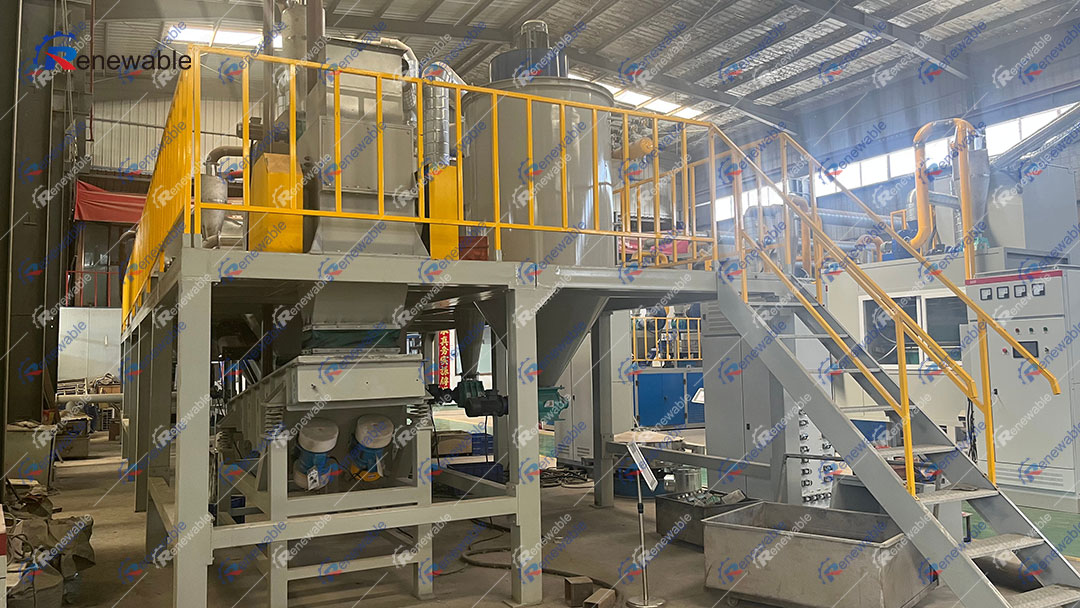
Waste lithium battery recycling equipment uses crushing processes to process lithium-ion batteries, simplifying the traditional recycling process for positive and negative electrode materials. It requires no added chemicals and eliminates the need to consider the generation of new pollutants. Jiudong Environmental Protection provides a complete lithium battery crushing and processing line, realizing the sustainable development of waste lithium-ion batteries. Therefore, the separation and recycling of positive and negative electrode metals from waste lithium-ion batteries has broad application prospects.