After electrolytic refining, copper can be obtained with higher purity to meet the needs of different industries. Today we will learn about the relevant knowledge of copper electrolysis.
Copper Electrolytic Refining Plant Principle:
Through electrolysis of the electrolyte, crude copper is used as the anode, pure copper as the cathode, and a solution containing copper ions is used as the electrolyte. Copper ions dissolve at the anode and precipitate at the cathode. Impurities in the crude copper, such as inert impurities, do not dissolve and form anode precipitates, which are deposited at the bottom of the electrolytic cell. Although active impurities dissolve at the anode, they cannot precipitate at the cathode. Therefore, high-purity copper can be obtained through cathode electrolysis.
The copper electrolytic refining process was first applied to industrial production in 1896 and has a history of more than 140 years, during which it has made great progress.
Copper Electrolytic Machine
Main Equipment for Copper Electrolytic Refining:
(1) Electrolytic Cell
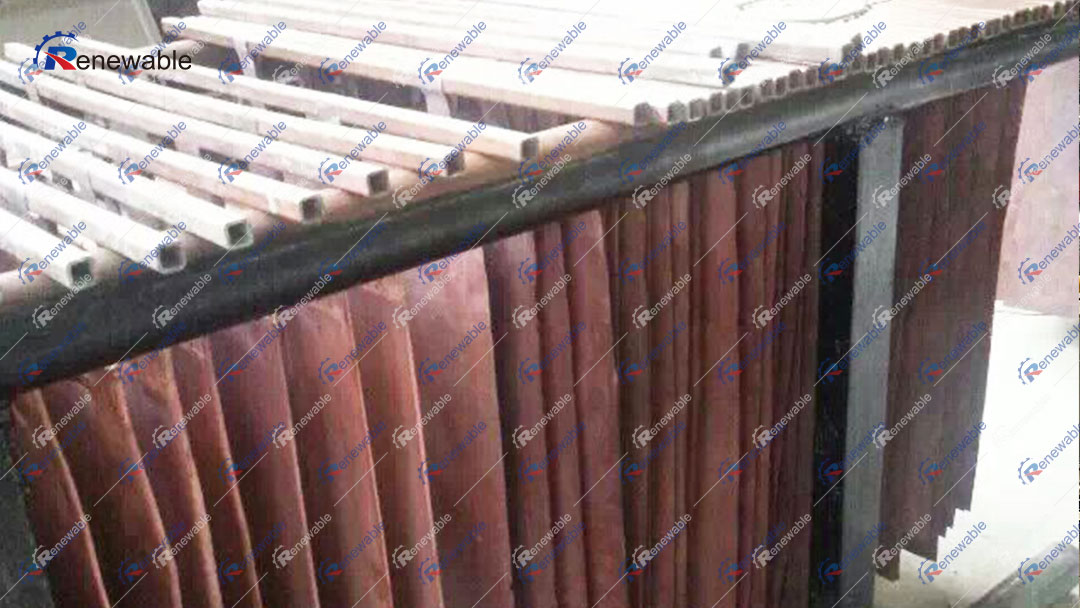
The electrolytic cell is the main equipment in the copper electrolysis workshop. It is a rectangular tank containing anode and cathode plates, which are suspended alternately. The tank has liquid and slurry discharge outlets.
The electrolytic cell is generally constructed of reinforced concrete and lined with anti-corrosion resin. The tank not only supports the anode and cathode but also provides acid protection. The electrolytic cells are arranged sequentially on support beams, which are covered with insulating material to prevent the tank from conducting electricity to the ground.
(2) Cathode Manufacturing Unit
This unit processes copper sheets peeled from the titanium substrate through embossing, riveting (perforated rods), and leveling to create cathodes. These cathodes are then arranged for crane lifting.
Due to its unique function, the cathode production unit needs to be manufactured by a specialized manufacturer. The copper sheet thickness and the processing capacity of the riveting ears should be considered during the design and manufacturing of this unit.
(3) Anode Processing Unit
This unit processes the anode plates obtained through pyrometallurgical refining to meet the standards required for the electrolytic process. The workflow of this unit includes: flattening the anode plate surface, cleaning the lugs, tightening the lugs, and adjusting the anode plate spacing.
During the design and manufacturing of the anode treatment unit, the quality of each hydraulic seal and the processing capacity of the anode plate should be fully considered.
(4) Electrolytic Copper Cleaning Unit
This unit cleans and dries the electrolytic copper leaving the electrolytic cell, removes the conductive rods, and stacks, packages, and weighs the electrolytic copper. Many domestic electrolytic copper manufacturers do not use this unit and rely on manual labor to complete the various processes.
(5) Anode Residue Processing Unit
This unit cleans, stacks, packages, and weighs the anode residue leaving the electrolytic cell, and then sends the packaged anode residue to a fire refining plant for remelting. Due to the simplicity of this unit’s function, many domestic copper electrolysis manufacturers do not use this unit and rely on manual labor to process the anode residue. If you have any questions or problems regarding copper electrolysis, please feel free to contact us for consultation.