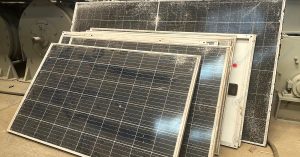
As solar power generation technology matures and becomes more widespread, the disposal of used photovoltaic panels, as they reach the end of their useful life, will become increasingly problematic. Recycling used photovoltaic panels promotes resource recycling, and efficient resource recovery can also reduce the cost of mining new materials and environmental impact.Photovoltaic panels primarily consist of glass, silicone sheets, aluminum frames, and batteries, all of which can be reused.
Solar Panel physical recycling technology
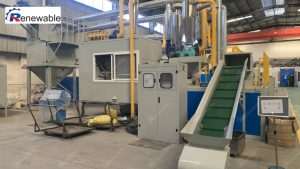
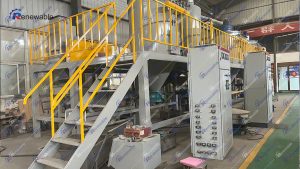
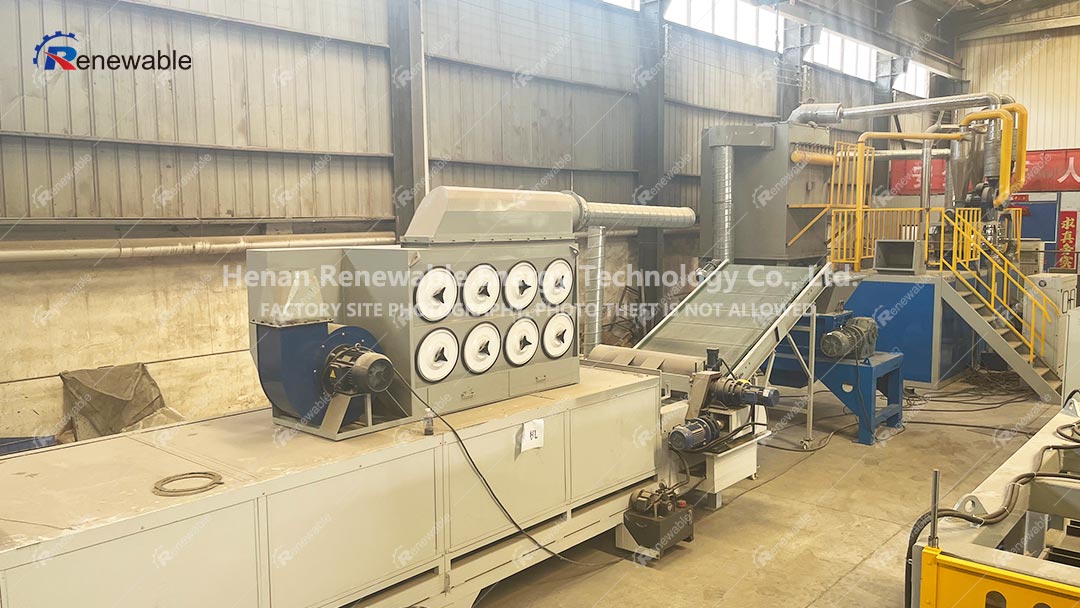
Scrap photovoltaic panels first pass through a deframing machine, removing the aluminum frame and junction box, leaving the panels without the frame and junction box. The panels, stripped of the aluminum frame and glass, are then crushed and sorted to separate metals from non-metals, extracting valuable silicon powder, copper powder, and plastics. The recovery rate can reach over 98% (depending on the actual material).
Solar Panel physical recycling process
The photovoltaic panel processing equipment sort silicon powder, copper powder and plastic powder with high market value through physical crushing and sorting.
There are generally three main steps for the recyclingof photovoltaic modules
First step is to disassemble the junction box and remove aluminum frames by machine;
Second step is to remove the tempered glass;
Third step The panels are crushed and sorted the silicon powder and copper powder and plastic powder.
Solar panel pyrolysis recycling technology
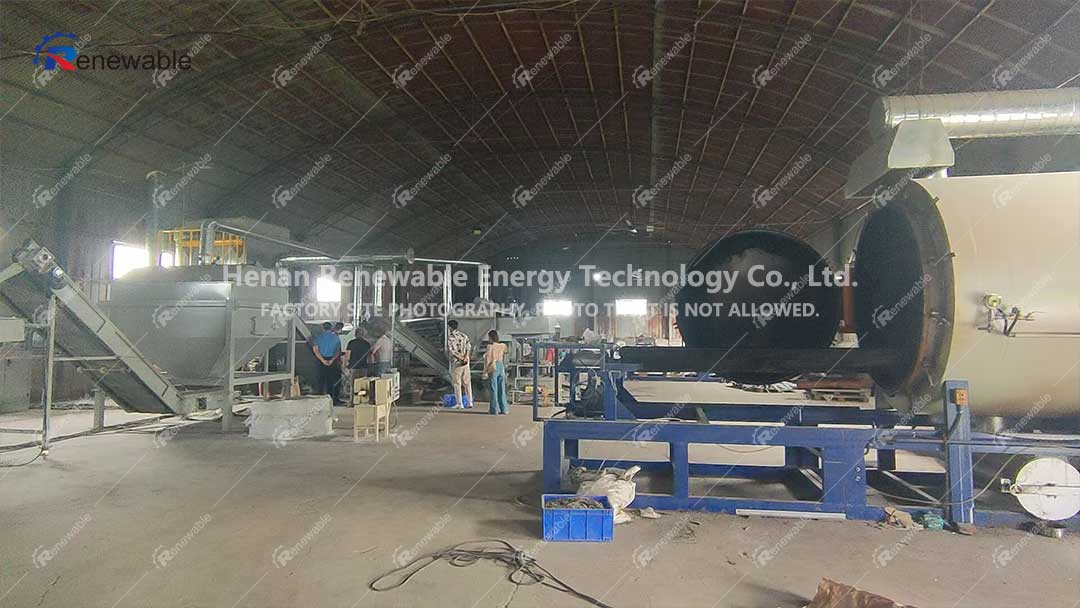
In the processing of waste photovoltaic panels, the frames and junction boxes are first removed. The preprocessed panels are then fed into a cracking furnace for high-temperature pyrolysis, yielding a mixture of glass chunks, silicon wafers, and copper wires (referred to as photovoltaic bulk materials). Subsequently, the pyrolyzed mixture is conveyed to a feed bin. It then undergoes sequential separation through two layers of vibrating screens and multiple air flow classifiers, supplemented by a wind separator and an eddy current separator. Concurrently, dust is treated using dust collectors (including pulse dust collectors). Ultimately, glass, silicon wafers, and copper wires are sorted and recovered.
Solar panel pyrolysis recycling process
The pyrolysis recycling process for photovoltaic modules generally consists of three main steps:
Step 1: Waste solar photovoltaic panels are transported into the reactor by a claw-type machine. This process usually takes about 2 hours. Once the reactor is full, the door is closed and heating begins.
Step 2: The pyrolysis furnace is heated by resistance heaters. When the temperature rises to the set value, the cracking process starts, which takes about 8-10 hours.
Step 3: The products after pyrolysis are sorted to obtain silicon wafers, copper wires and glass.
Physical treatment is a powerful practice in the treatment of used photovoltaic panels, effectively implementing the concept of sustainable development. It not only reduces the environmental impact of waste but also effectively recycles resources, establishing a positive example of a circular economy. With the continuous advancement of technology and the strengthening of social environmental awareness, a new benchmark has been set for the realization of ecological civilization construction.